Some places don't ask you to practise breathing. They simply take the breath out of you — and then, slowly, give it back deeper than before. Buçaco was one of those places for me.
I had wanted to visit for a long time, and this summer I finally walked through the old walled gate of the Mata Nacional do Buçaco, in central Portugal near Luso — a little over an hour south of Porto. It is a forest enclosed by kilometres of stone wall, kept and shaped by human hands since the sixth century, and tended by barefoot Carmelite monks from 1628 onward. You feel that age the moment you step inside. The noise of the world falls away at the wall.
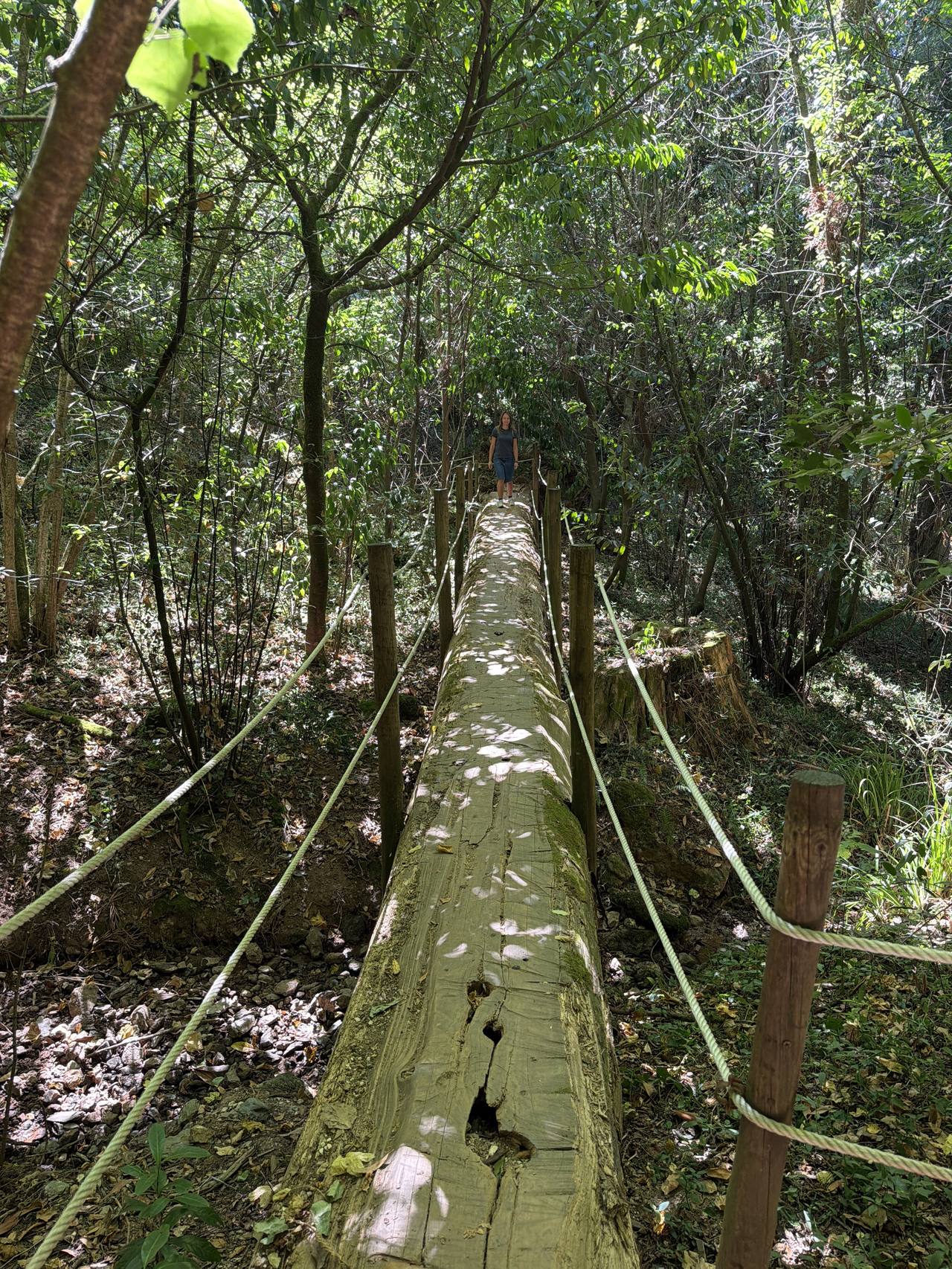
The paths lead you past cool ferns, mossy fountains and hundreds of tree species gathered here from across the world — Himalayan cedars, Mexican cypress, redwoods — one of the great botanical collections of Europe. At one point the trail simply becomes a fallen trunk, worn smooth, with a rope to steady your hand. You slow right down. You watch your feet. You breathe.
A forest built for wonder
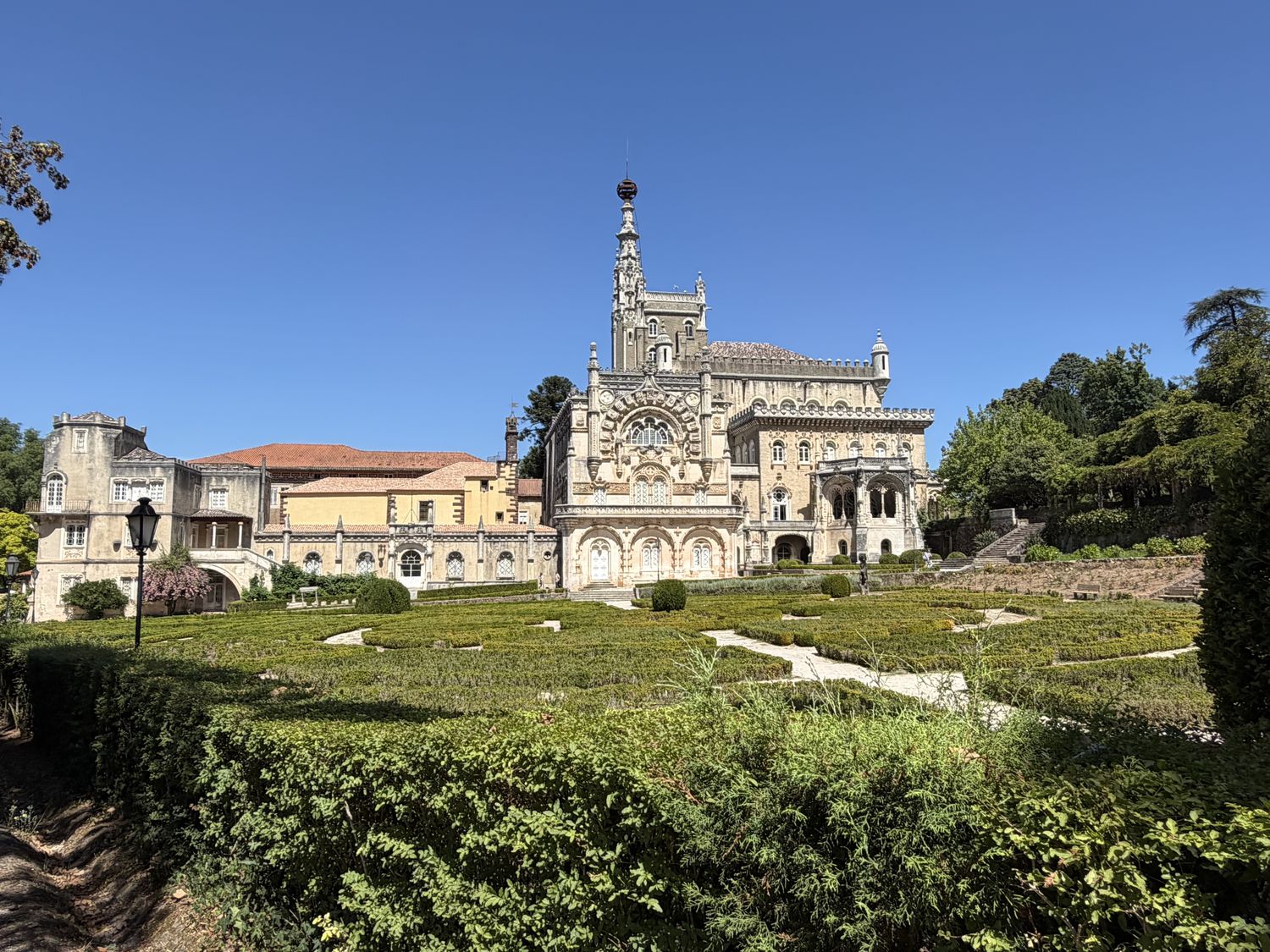
At the heart of it all stands the Palace — an extravagant neo-Manueline palace raised at the turn of the twentieth century on the grounds of the old monastery, its stone lacework rising above formal box-hedge gardens. Monks, then kings, then spa guests: for four centuries people have come to this hillside to feel better. What changed in 2026 is that a certificate finally caught up with what the body already knew.
What makes it a healing forest
Buçaco isn't only beautiful — as of July 2026 it is officially a certified therapeutic forest, one of only four in the world and the first on the Iberian Peninsula. It joins the Benedictine abbey forest of Göttweig in Austria and two sites in Germany, Lahnstein and Bad Nauheim. The certification, awarded by the Germany-based Healing Forest – International Certification Office, runs until 2031.
The title isn't decorative. To qualify, a forest must be in a near-natural state, sheltered from noise and wind, with trails of varying difficulty, dedicated areas for therapeutic work, and programmes led by trained forest therapists. A certified healing forest is designed for genuine therapeutic use — for people living with cardiovascular, respiratory, orthopaedic, psychosomatic and neurological conditions. In other words, a place where nature is treated as part of the medicine.
Standing under a giant
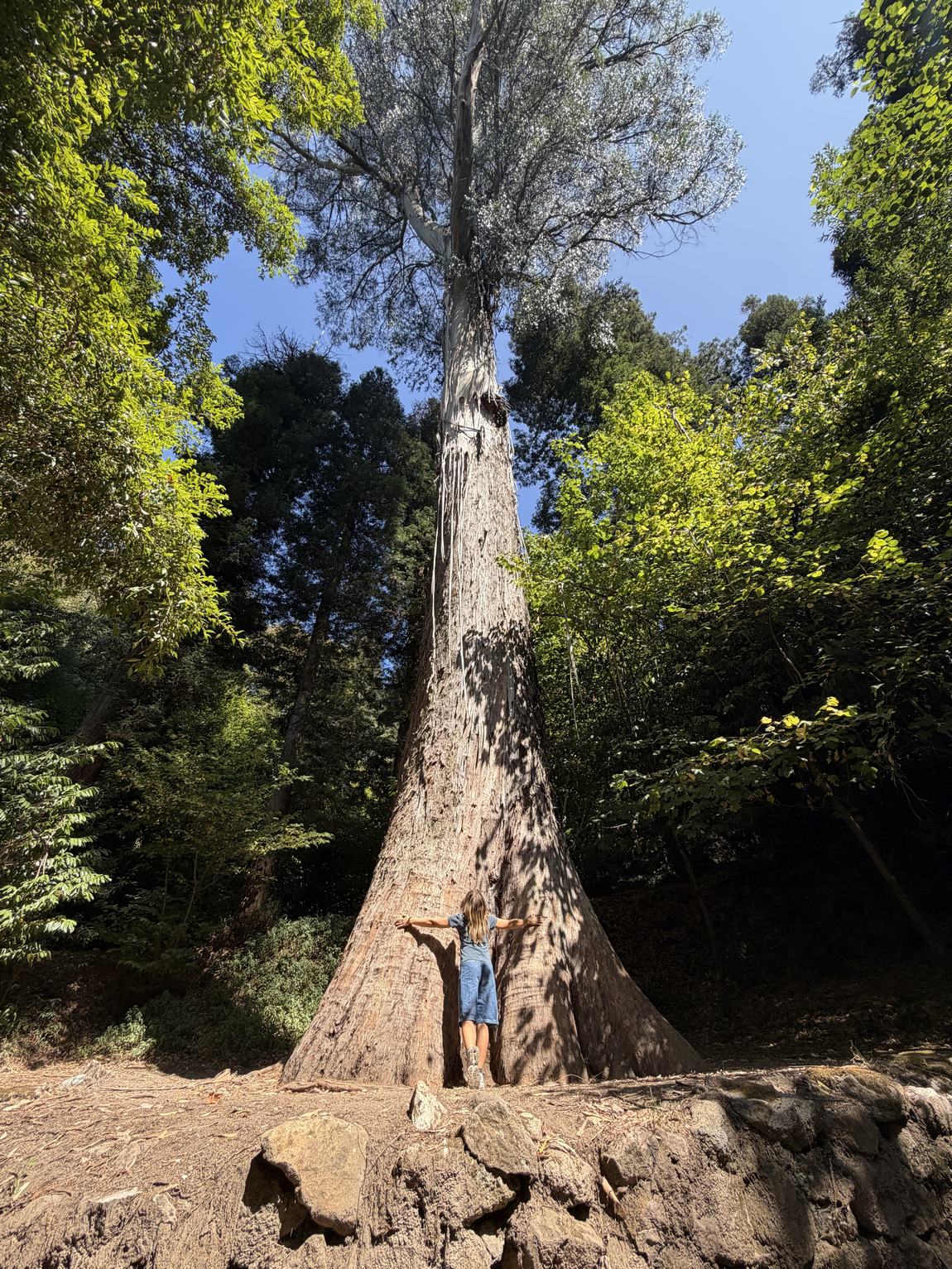
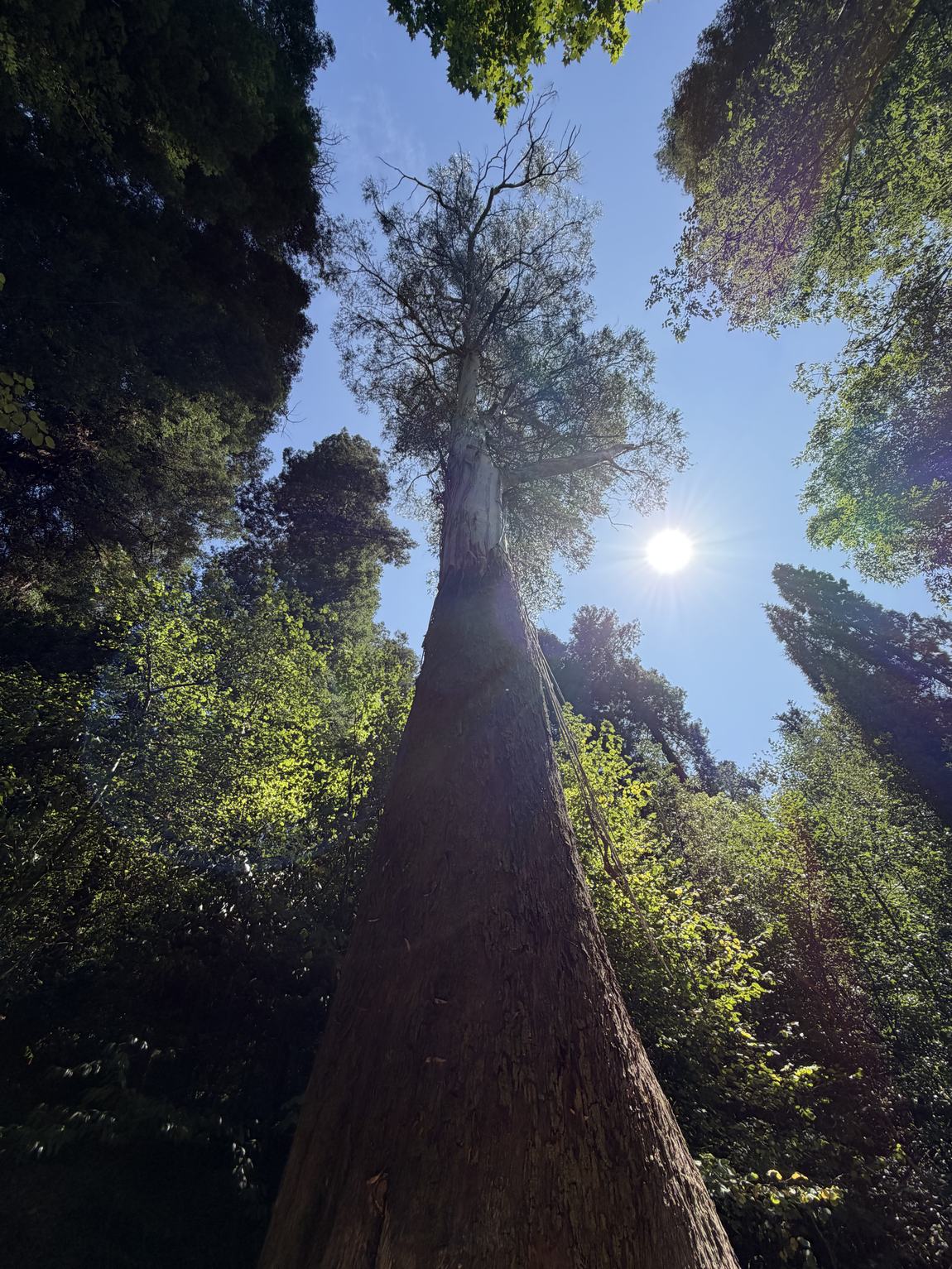
And then there is this tree. The Eucalipto Gigante — one of the forest's towering giants, so tall that to take it in you have to lean all the way back and look almost straight up. I stood at the base with my arms stretched wide and couldn't reach even a fraction of the way around it. I stayed a long while, just breathing. There was nothing else to do.
"A healing forest doesn't need to be practised. It only needs to be entered. The breath does the rest."
Why the body knows before the mind does
What struck me most was how quickly my own breathing changed — before I had decided to slow it. This is exactly what the research on shinrin-yoku, or forest bathing, keeps describing. Time among trees shifts us out of fight-or-flight and into rest-and-digest: studies have found that forest bathing measurably lowers cortisol, the body's main stress hormone, and links it to reduced blood pressure and calmer nervous systems — especially for people carrying the chronic tension of city life.
Part of it is the air itself. Trees release aromatic compounds called phytoncides — the scent of a forest is partly the trees defending themselves — and breathing them in has been linked to a measurable rise in the activity of our natural killer cells, the immune cells that hunt viruses and damaged cells. Part of it is simpler still: fewer demands on the attention, softer sound, cleaner air, and the quiet invitation to breathe through the nose, slowly, the way the body prefers.
Breathwork and the forest, together
As a Buteyko and Pranayama teacher, I spend my days helping people breathe less, breathe slower, and breathe through the nose. Standing under that eucalyptus, I realised how much of that work a place like Buçaco does on its own. The forest lowers the baseline. It relaxes the body before you've begun, so the breath naturally lengthens and the pause after the exhale feels easy rather than forced.
You don't need a certified forest to feel this — a park, a riverside, a single old tree will do. But standing beneath the Eucalipto Gigante, I understood why Portugal fought for years to have Buçaco recognised. Some forests really do heal. The best thing we can do is turn up, close the mouth, and let them.
If you go: the forest sits above the little spa town of Luso, just over an hour from Porto or about half an hour from Coimbra. Go early, leave the headphones at home, and let the forest do the rest — the quiet is the point.
Try it yourself
A three-minute forest reset
- Find a tree — any tree. Stand close enough to touch it, feet steady on the ground.
- Close your mouth. Take three slow breaths through the nose, letting each exhale run a little longer than the inhale.
- Now stop directing the breath entirely. Let it move on its own and simply notice the air, the sound, the light.
- Stay for three minutes. Notice what has softened by the end.
Sources
- Healing Forest – International Certification Office / Fundação Mata do Buçaco. Buçaco certified as the world's fourth therapeutic forest. July 2026.
- Antonelli M, et al. Effects of forest bathing on cortisol: a systematic review and meta-analysis. 2019.
- Li Q, et al. A forest bathing trip increases human natural killer activity and expression of anti-cancer proteins. Journal of Biological Regulators and Homeostatic Agents. 2008;22(1):45–55.